

Fat Freezing vs Ultrasound Cavitation: what is the difference?
If you are comparing fat freezing vs ultrasound cavitation, you are probably looking for a non-surgical way to tackle stubborn areas that do not seem to shift with healthy eating and regular exercise. Both treatments are popular for body contouring, both are designed to reduce localised fat rather than overall body weight, and both involve little to no downtime. However, they feel different, work differently, and tend to suit different treatment goals.
Fat freezing, also known as cryolipolysis, uses controlled cooling to target and destroy fat cells in a specific area. Over the following weeks and months, the body gradually clears those damaged cells through its natural processes. This approach is supported by clinical evidence, including studies indexed on PubMed, and is widely used for small, pinchable pockets such as love handles, lower abdomen, inner thighs and under the chin.
Ultrasound cavitation uses low-frequency ultrasound waves to disrupt fat cells, turning them into a liquid form that the body can process through the lymphatic system and liver. It is often chosen for larger treatment zones, and some people prefer it because sessions are generally shorter, more comfortable and may produce visible changes sooner.
For many people, the best choice comes down to five practical questions:
- How small or large is the treatment area?
- Do you want faster visible changes, or are you happy to wait for a more gradual outcome?
- How many sessions are you willing to have?
- What is your budget?
- Do you want precision body contouring, or a broader inch-loss approach?
At clinics such as Fat Freezing Near Me, consultations are typically used to assess the area, discuss suitability, explain realistic outcomes, and provide clear pricing and aftercare advice. That matters because neither treatment is a substitute for liposuction, and neither is intended as a treatment for obesity. Instead, they are best viewed as body contouring tools for people near their goal shape who want help with areas that seem resistant to lifestyle measures.
Quick answer
In simple terms, fat freezing is usually better for precise, stubborn fat pockets, while ultrasound cavitation is often better for larger areas, lower budgets and quicker visible changes. The right option depends on your body shape, medical history and expectations.
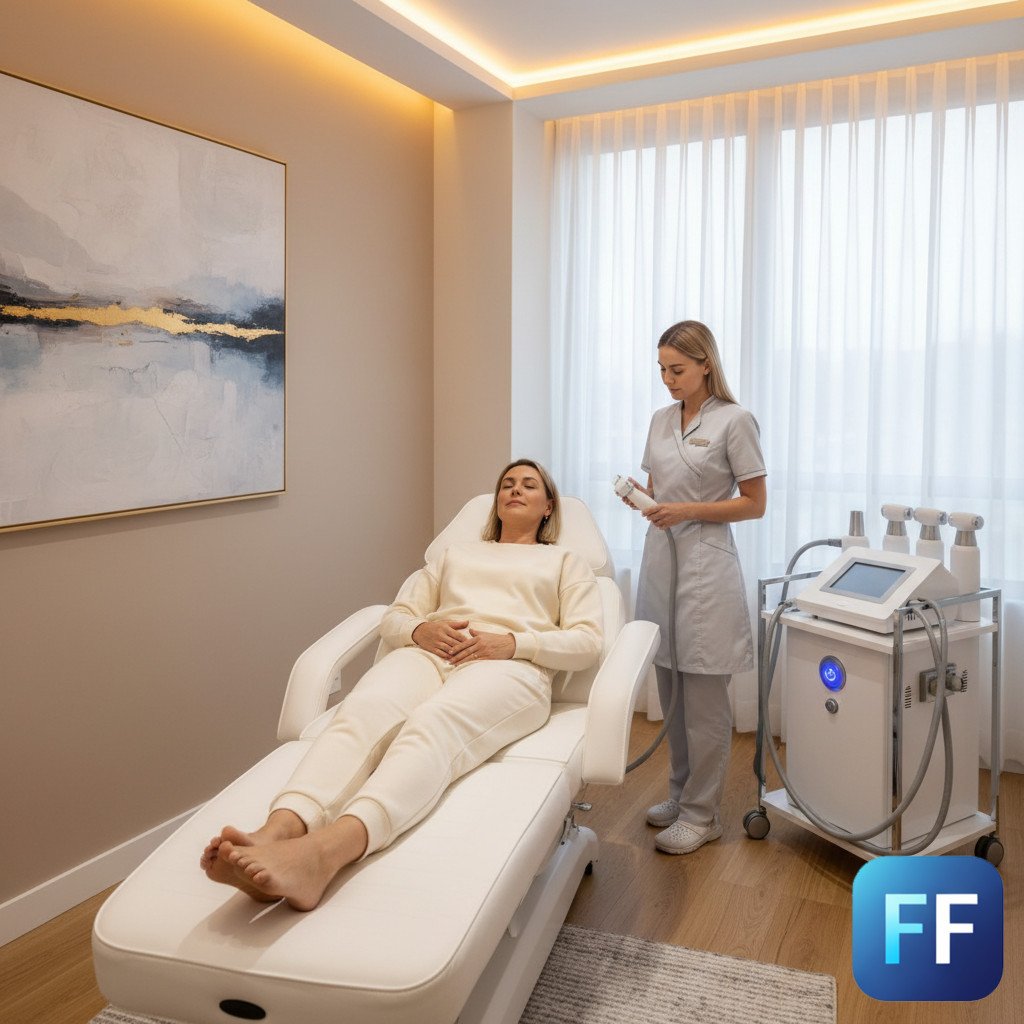
How fat freezing and cavitation work
How fat freezing works
Fat freezing, or cryolipolysis, applies controlled cooling to a localised fat bulge. The applicator draws the tissue into place and cools it to a temperature commonly in the region of -5°C to -10°C. Fat cells are more vulnerable to cold than surrounding tissues, so the cooling process can trigger apoptosis, or programmed cell death, without surgery. The body then gradually clears the treated fat cells over time through inflammatory and lymphatic processes. Clinical reviews have described average fat layer reductions of around 20% to 25% per treated area after a session, though individual outcomes vary. You can read more in peer-reviewed literature via PubMed.
A typical session lasts around 35 to 60 minutes per area. During treatment, people often describe strong cold, pulling, pressure or pinching at the start, followed by numbness as the area settles. Results are not immediate. Most people begin to notice visible change after a few weeks, with fuller results at around one to three months and sometimes continuing up to six months.
How ultrasound cavitation works
Ultrasound cavitation uses low-frequency sound waves, often around 40kHz, to create microscopic bubbles around fat cells. These bubbles disrupt the fat cell membrane, helping to liquefy the fat content so it can be processed through the lymphatic system and liver. Sessions are usually shorter than fat freezing, often around 20 to 40 minutes, and treatment is commonly described as warm, easy and relatively relaxing.
Visible changes can appear more quickly than with cryolipolysis, sometimes within days, though full outcomes are usually judged over several weeks and may continue to improve over 6 to 12 weeks. Cavitation often works best as a course of treatments rather than a one-off session.
What the evidence says
One comparative clinical study involving 45 participants found that both cryolipolysis and ultrasound cavitation improved waist circumference and suprailiac skinfold thickness after two months, with both outperforming diet alone and no significant difference between the two treatments in those measurements. This study is available on PubMed. That does not mean the treatments are identical in practice, but it does show that both can be effective tools for non-invasive body contouring.
Where each treatment tends to work best
| Treatment | Usually best suited to | Common areas |
|---|---|---|
| Fat freezing | Smaller, well-defined, pinchable fat pockets | Love handles, lower abdomen, inner thighs, upper arms, chin |
| Ultrasound cavitation | Larger treatment zones and people wanting a more comfortable course of sessions | Abdomen, thighs, hips, flanks, buttocks area |
If your priority is a highly targeted approach for one or two specific bulges, fat freezing often has the edge. If your goal is a broader slimming effect across a larger zone and you do not mind attending multiple appointments, cavitation may be more appealing.
Fat Freezing vs Cavitation: benefits and considerations
Benefits
- Fat freezing can deliver a predictable reduction of around 20% to 25% in the treated area after a session, making it attractive for precise contouring.
- Ultrasound cavitation is often more comfortable, with many people finding it warm and relaxing rather than intensely cold.
- Both treatments are non-invasive, require no general anaesthetic and usually allow a return to normal activities straight away.
- Cavitation is generally less expensive per session and can cover larger areas more efficiently.
- Fat freezing usually requires fewer sessions overall, often around 1 to 4, depending on the area and response.
- Both can permanently reduce fat cells in treated areas when weight remains stable.
Considerations
- Neither treatment is designed for overall weight loss, obesity management or dramatic body transformation.
- Fat freezing results take time, often one to three months and sometimes up to six months, which can feel slow.
- Cavitation commonly requires a longer course, often around 4 to 12 sessions, so the total commitment can add up.
- Fat freezing can feel uncomfortable during treatment and may cause numbness, tenderness or aching for days or weeks afterwards.
- Cavitation results depend heavily on hydration, aftercare and lifestyle habits, and some people may need maintenance sessions.
- Not everyone is suitable: for example, cryolipolysis may be unsuitable in certain cold-related conditions, while cavitation may not be appropriate for people with liver concerns or some implanted medical devices.
Results, downtime, comfort and cost: the practical comparison
How many sessions will you need?
This is one of the clearest differences between the two treatments. Fat freezing is often planned as a smaller number of sessions, commonly between 1 and 4 depending on the body area, applicator choice and how much reduction is wanted. Cavitation is usually delivered as a course, often around 4 to 12 sessions for best results.
That does not automatically make one better value than the other. A single fat freezing session may cost more, but if you need only one or two treatments it can still make sense. Cavitation sessions are usually cheaper individually, but the overall course cost can still become significant.
How quickly will you see results?
If speed matters, cavitation often wins. Some clients notice changes very quickly, whether that is a subtle reduction in measurements or a less puffy appearance in the treated zone. However, the fullest result still takes time and depends on your body processing the disrupted fat.
Fat freezing requires more patience. Because the body gradually clears the treated fat cells, results emerge more slowly. This slower process is completely normal and should be discussed honestly in consultation. Any clinic promising instant fat freezing results should be treated with caution.
Which treatment feels more comfortable?
Most people find ultrasound cavitation easier to tolerate. It is generally described as painless or mildly warm. Fat freezing tends to be more intense at the start because of the suction, pressure and cold, and the area may stay numb, tender or bruised for a while afterwards.
That said, comfort is personal. Some clients would rather have one or two more intense appointments than attend a longer course of milder treatments.
What about downtime?
Both treatments are considered minimal-downtime options. You can usually return to work, driving and normal routines on the same day. Temporary redness, swelling or bruising can happen with either treatment. Cryolipolysis may also cause temporary numbness and aching. Reputable guidance on non-surgical cosmetic procedures from the NHS is worth reading before booking treatment.
How much do fat freezing and cavitation cost?
Costs vary by clinic, location, area size and treatment plan, but published market ranges typically place fat freezing at roughly $600 to $1500 per session and cavitation around $200 to $500 per session. A full course for either treatment can fall roughly between $1000 and $4000 depending on how many areas are treated and how many sessions are needed.
In the UK, pricing is usually quoted in pounds rather than dollars, and a quality provider should explain exactly what is included, such as consultation, treatment planning, aftercare and any review appointments. Clinics like Fat Freezing Near Me typically focus on consultation-led planning and clear expectations so you understand the likely number of sessions, expected fat reduction and total cost before starting.
Can either treatment tighten loose skin?
Fat freezing is not considered a skin-tightening treatment. Ultrasound cavitation may offer a mild tightening effect in some cases, but it should not be presented as a solution for significant skin laxity. If loose skin is your main concern, ask the clinic whether another treatment may be more appropriate.
Are the results permanent?
Both treatments can permanently reduce the number of fat cells in the treated area. However, this is often misunderstood. Permanent does not mean the area can never get bigger again. If you gain weight, remaining fat cells can still enlarge, which may affect your shape. Long-term success depends on weight stability, regular exercise and a balanced diet.
The best body contouring treatment is not the one with the boldest marketing claim, but the one that matches your body shape, budget and expectations.
Safety, side effects and who should avoid treatment
Although fat freezing and ultrasound cavitation are non-surgical, they are still medical-aesthetic procedures and should be approached carefully. A proper consultation is essential to assess whether the treatment area is suitable, review your medical history and explain realistic outcomes.
Common side effects
Both treatments can cause temporary redness, swelling and bruising. Fat freezing may also lead to numbness, tingling, tenderness or delayed discomfort in the treated area. These effects usually settle, but you should know what to expect before treatment starts.
With cavitation, side effects are generally mild and may include temporary warmth, skin irritation or sensitivity. Many providers recommend drinking plenty of water, staying active and sometimes combining treatment with massage or exercise to support lymphatic drainage.
Rare but important risks
One rare risk associated with cryolipolysis is paradoxical adipose hyperplasia, where the treated area enlarges rather than shrinks. It is uncommon, but it is a known complication and should be mentioned in any honest consent conversation. Reviews of cryolipolysis safety are available via PubMed.
For cavitation, suitability can depend on liver health and other medical factors because the body has to process the disrupted fat. It is also important to disclose any implanted medical devices and relevant health conditions to your practitioner.
Who may not be suitable?
- People who are pregnant or breastfeeding are generally advised to avoid elective body contouring treatments.
- Those with cold-related conditions, such as cold urticaria or cryoglobulinaemia, may not be suitable for fat freezing.
- People with significant liver issues may be advised against cavitation.
- Anyone seeking major weight loss or treatment for obesity should not rely on these procedures.
If you are unsure, ask your provider whether your case requires GP or specialist input first. Good clinics welcome these questions rather than brushing them aside.
Which treatment is right for you?
Choose fat freezing if you have a clearly defined, pinchable pocket of fat and want a more precise contouring approach, even if it costs more per session and takes longer to show full results. It is often well suited to love handles, a lower tummy pouch, bra bulges or a small upper-arm area.
Choose ultrasound cavitation if you want to treat a broader area, prefer a more comfortable session, have a tighter budget or would like to see visible change sooner. It can be a practical choice for abdomen, thighs and hips when you are happy to commit to a full course.
Some clinics combine the two approaches, using fat freezing for precision reduction and cavitation for broader contouring or mild tightening support. That may be worth discussing if you have more than one concern.
Whichever route you choose, look for a provider that offers:
- A thorough consultation and suitability assessment
- Clear discussion of risks, alternatives and expected results
- Transparent pricing
- Realistic photography and no exaggerated promises
- Written aftercare and review arrangements
At Fat Freezing Near Me, the emphasis on UK clinics, consultation-led planning, clear expectations, pricing transparency and aftercare reflects what patients should expect from any reputable provider. In body contouring, trust and proper assessment matter as much as the technology itself.
Final verdict
There is no universal winner in the fat freezing vs ultrasound cavitation debate. Fat freezing tends to come out ahead for precision and fewer sessions, while cavitation often appeals for comfort, lower upfront cost and quicker visible changes. Both can work well for the right candidate, and both require realistic expectations and healthy habits afterwards.
If you are deciding between them, the smartest next step is not to chase the cheapest deal or the most dramatic claim. It is to book a proper consultation, understand your suitability, and choose the treatment plan that fits your body and your goals.

Is fat freezing better than ultrasound cavitation?
Not necessarily. Fat freezing is often better for small, stubborn, pinchable fat pockets where precision matters. Ultrasound cavitation is often better for larger areas, people who want a more comfortable treatment, or those looking for quicker visible changes. The best option depends on the area being treated, your budget, your tolerance for multiple sessions and your medical suitability.
How long do results last?
Both treatments can permanently reduce fat cells in treated areas. However, long-term results depend on maintaining a stable weight. If you gain weight later, the remaining fat cells in the area can enlarge, which may affect your shape again. A healthy diet, regular exercise and sensible aftercare are important for preserving results.
Does either treatment help with weight loss?
No. Neither fat freezing nor ultrasound cavitation is intended for significant weight loss or obesity treatment. They are body contouring procedures designed to reduce localised fat deposits that have not responded well to lifestyle measures. If your main goal is substantial weight reduction, speak to a medical professional about evidence-based weight management options. The NHS healthy weight guidance is a useful starting point.
Are fat freezing and cavitation safe?
For suitable candidates, both are generally considered safe when performed by a trained provider using appropriate equipment and protocols. Common side effects include temporary redness, swelling and bruising. Fat freezing may also cause numbness or tenderness, while cavitation may cause mild skin irritation. As with any cosmetic procedure, you should disclose your full medical history and review the clinic’s consent process carefully. The NHS cosmetic procedures guidance is worth reading before treatment.
How many sessions will I need?
Fat freezing often involves fewer sessions, commonly around 1 to 4 per area. Ultrasound cavitation is more commonly done as a course of around 4 to 12 sessions for best results. The exact number depends on the treatment area, the amount of localised fat, your body’s response and the outcome you want to achieve.
Can I combine fat freezing and ultrasound cavitation?
Yes, in some cases clinics combine them as part of a wider body contouring plan. For example, fat freezing may be used for a particularly stubborn bulge, while cavitation may be used on a broader surrounding area or where a mild tightening effect is desired. Whether combination treatment is appropriate should be decided in consultation, based on your goals, timeline and medical history.