

Fat freezing vs liposuction: the essential difference
If you are trying to decide between fat freezing and liposuction, the most important point is simple: fat freezing is non-invasive, while liposuction is surgery. Both can reduce stubborn pockets of fat, but they differ significantly in how much fat they remove, how quickly results appear, what recovery involves and who they suit best.
Fat freezing, also known as cryolipolysis and widely recognised under the CoolSculpting brand, uses controlled cooling to target and destroy fat cells without incisions. Liposuction, by contrast, involves small surgical cuts and a cannula to physically remove fat. According to peer-reviewed evidence published on PubMed, cryolipolysis can achieve measurable reductions in subcutaneous fat thickness, while liposuction generally removes a larger volume in one session.
For many people, this is not about asking which treatment is universally “better”, but which one is more appropriate for their goals, timeline, tolerance for downtime and comfort with surgical risk. If you are also comparing other non-surgical contouring options, our guide to fat freezing compared with ultrasound cavitation may be helpful.
It is also worth noting that fat freezing is FDA cleared for specific treatment areas, which gives patients reassurance that the technology has been reviewed for safety and efficacy in approved uses. However, like liposuction, it is intended for body contouring rather than weight loss.
At a glance
| Treatment | Fat Freezing | Liposuction |
|---|---|---|
| Type of procedure | Non-invasive | Surgical |
| How it works | Controlled cooling damages fat cells | Cannula loosens and suctions out fat |
| Typical fat reduction | About 10-25% per treated area/session | Often around 50-70% in treated area |
| Results timeline | Visible in weeks, fuller results in 3-4 months | Immediate change with final results over 1-3 months |
| Downtime | Minimal | Moderate to significant |
| Best for | Stubborn localised fat near goal weight | Larger-volume fat removal and more dramatic change |
How each procedure works
What happens during fat freezing?
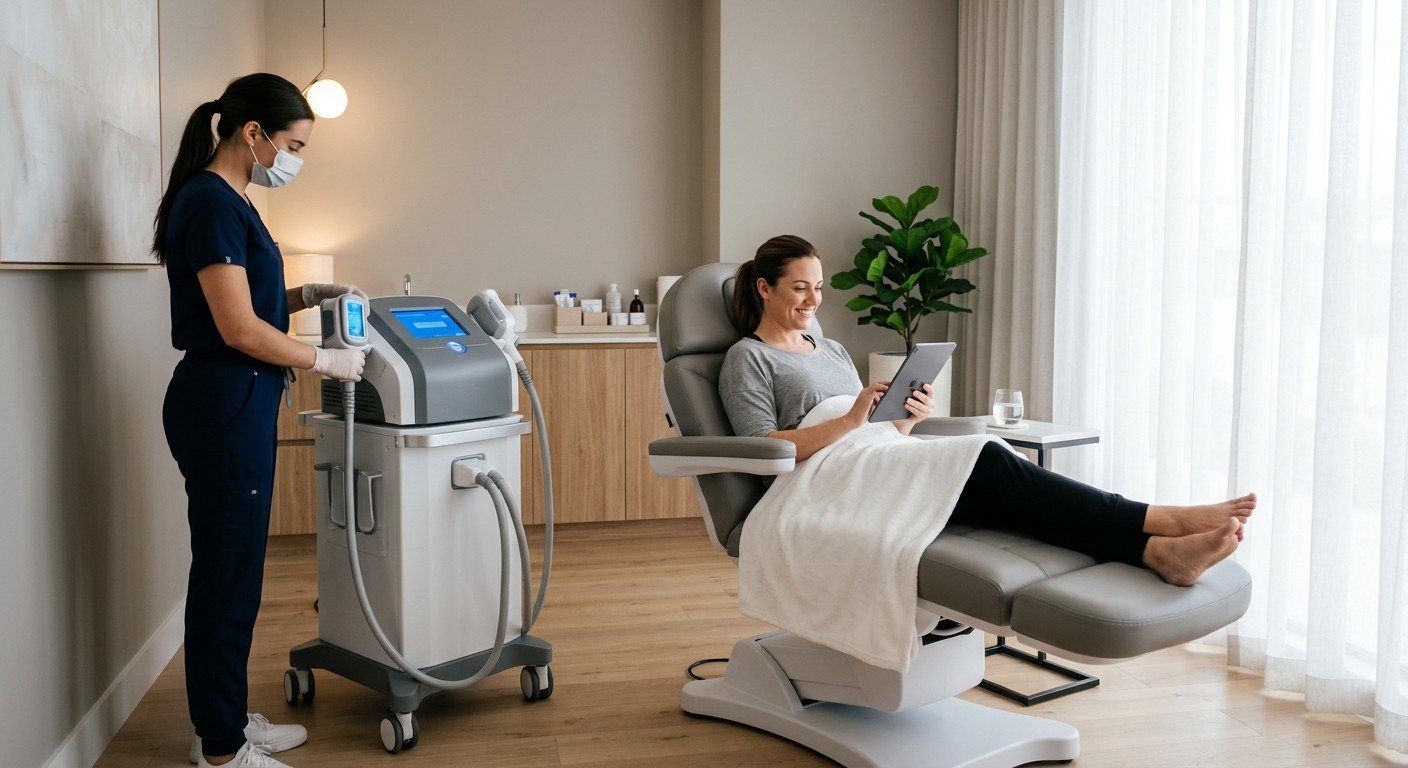
Cryolipolysis uses a cup-shaped applicator that gently draws the targeted area into position and cools it to a carefully controlled temperature. The principle behind it is that fat cells are more vulnerable to cold injury than surrounding tissues. Research reviews indexed on PubMed report that this selective cooling can damage adipocytes while largely sparing skin, nerves, muscles and blood vessels when treatment is properly delivered.
After treatment, the body gradually processes and eliminates the damaged fat cells. This is why results appear progressively rather than overnight. Many patients start to notice a change within about three weeks, with the clearest improvement developing over three to four months.
Approved treatment areas have expanded over time and may include the flanks, abdomen, thighs, bra line, back, beneath the buttocks and under the chin. It is specifically used for localised fat deposits, not for visceral fat or obesity management.
What happens during liposuction?
Liposuction is a surgical procedure. A clinician makes small incisions near the treatment area, inserts a thin tube called a cannula, breaks up the fat and vacuums it out. Because the fat is physically removed during the procedure, the contour change is more immediate, although swelling means the final result still takes time to settle.
The NHS guidance on liposuction makes clear that it is a cosmetic procedure with recovery time and potential complications, and that patients should think carefully about the risks as well as the benefits. Unlike cryolipolysis, liposuction usually involves anaesthesia and a more structured post-operative recovery period.
One important similarity
Although they work differently, both procedures are designed for body contouring. Neither should be seen as a substitute for a healthy diet, regular movement or long-term weight management. The best candidates are usually those who are already relatively close to their ideal weight but want help with resistant areas that do not respond well to lifestyle changes alone.
Fat Freezing vs Liposuction: benefits and considerations
Benefits
- Fat freezing: non-invasive, no incisions and usually no formal downtime.
- Fat freezing: gradual, natural-looking reduction that suits people wanting subtle contouring.
- Fat freezing: treatment can fit around work and daily routines more easily.
- Liposuction: removes a larger amount of fat in a single procedure.
- Liposuction: contour change is visible immediately, even though swelling takes time to settle.
- Liposuction: may be more efficient for patients seeking a more dramatic one-off result.
Considerations
- Fat freezing: often requires multiple sessions for a more noticeable reduction.
- Fat freezing: final results take several months to fully develop.
- Fat freezing: less suitable when a patient wants substantial volume removal in one go.
- Liposuction: surgery brings higher risks, including anaesthetic risks and post-operative complications.
- Liposuction: recovery is longer and usually involves swelling, bruising and time away from normal activities.
- Liposuction: not everyone is medically suitable for an invasive cosmetic procedure.
Effectiveness: how much fat can each treatment remove?
This is where the difference is often most striking. Fat freezing typically reduces the treated fat layer by around 20-25% per session, with some studies and treatment summaries placing the expected range at roughly 10-25%. Objective assessments in published studies have shown meaningful reductions using fat callipers, ultrasound and 3D photography. Review data on PubMed reports average ultrasound reductions in the region of 10.3% to 25.5% and calliper reductions from 14.67% to 28.5% following cryolipolysis.
Liposuction, by comparison, can remove a much larger proportion of fat from the treatment area in one procedure, often cited at around 50-70%. For someone seeking a more pronounced reduction in a single step, that may be the deciding factor.
Gradual vs immediate-looking results
Some patients actually prefer the slower pace of fat freezing. Because the body clears the damaged fat cells gradually, the change can look more subtle and natural over time. There is no sudden post-procedure transformation. That appeals to people who want discreet contouring without the visibility of surgery and its recovery.
Liposuction offers immediate reshaping, but there is an important caveat: what you see straight after the procedure is not the final result. Swelling, compression garments and tissue healing all influence the appearance during recovery. Final refinement usually becomes clearer over one to three months.
How many treatments are needed?
With liposuction, one procedure is often enough for the targeted area. With fat freezing, a second treatment may be recommended after several months if the initial reduction is not sufficient for the patient’s goals. This is one reason expectations matter so much. If you want a modest, non-surgical reduction, cryolipolysis can be a very good fit. If you want a more dramatic single-stage change, liposuction may align better.
We explore that trade-off in more depth in our guide to choosing between fat freezing and liposuction, including which goals typically suit each option best.
If your priority is avoiding surgery, fat freezing offers a measured, gradual approach. If your priority is removing more fat in one go, liposuction usually has the advantage.
Safety, side effects and recovery
Because fat freezing is non-invasive, it generally has a lighter side-effect and recovery profile than liposuction. Common short-term effects can include redness, bruising, tenderness, numbness or temporary skin sensitivity in the treated area. These usually settle within days or weeks. Published studies have also reported no significant adverse effects on lipid profiles or liver function following cryolipolysis, which supports its safety profile when used correctly by trained professionals.
For additional context on treatment safety, evidence summaries available through peer-reviewed medical literature and device information reviewed by regulators indicate that cryolipolysis is generally well tolerated in suitable candidates. Patients can usually go back to work, drive home and resume ordinary daily activity the same day.
Liposuction risks are more significant
Liposuction is still commonly performed and can be very effective, but it is undeniably a more serious undertaking. The NHS notes that risks can include bleeding, infection, contour irregularities, blood clots and complications related to anaesthesia. Recovery may involve swelling, bruising, soreness, support garments and a temporary pause from exercise or some forms of work.
That does not mean liposuction is unsafe in general; it means the decision should be made with full understanding of the medical, logistical and financial implications. A reputable surgeon should assess your medical history, explain realistic outcomes and talk through possible complications in detail.
Who should avoid treatment without proper assessment?
Anyone with significant underlying health conditions, concerns about wound healing, unrealistic expectations or uncertainty about whether the issue is really localised subcutaneous fat should have a proper consultation before proceeding. Fat freezing is not appropriate for weight-loss treatment, and liposuction is not a substitute for medically supervised obesity care. If there is any doubt, it is wise to discuss your options with an appropriately qualified clinician before choosing a cosmetic treatment.

Who is the ideal candidate for each option?
Fat freezing may suit you if:
- You are close to your target weight.
- You have small to moderate, pinchable areas of stubborn fat.
- You want to avoid surgery, anaesthesia and downtime.
- You are happy to wait a few months for final results.
- You want body contouring rather than major volume reduction.
Liposuction may suit you if:
- You want a more substantial reduction in one procedure.
- You accept the realities of surgery and recovery.
- You are medically suitable for an invasive cosmetic procedure.
- You want a more dramatic reshaping outcome.
One area where people sometimes get disappointed is expectation mismatch. Fat freezing can work very well for a lower-abdomen bulge, flanks or bra-line fullness, but it will not deliver the same degree of change as surgery in a single session. Equally, liposuction may be unnecessary for someone who only wants a modest improvement and would rather avoid an operating theatre altogether.
Whichever route you are considering, choose a provider who assesses your goals honestly rather than promising the most profitable treatment. In cosmetic medicine, appropriate selection is one of the strongest predictors of patient satisfaction.
Are results permanent?
Both procedures reduce the number of fat cells in the treated area. With cryolipolysis, destroyed fat cells are cleared by the body and do not regenerate in that exact location. With liposuction, the removed fat cells are also gone. However, neither treatment prevents the remaining fat cells from enlarging if you gain weight later. Long-term results therefore depend heavily on maintaining stable habits and body weight.
If you are mainly looking for a non-surgical solution and want to understand where fat freezing sits among other contouring technologies, you may also find our article on fat freezing versus ultrasound cavitation useful as part of your research.
The best body contouring treatment is not the most aggressive one; it is the one that matches your anatomy, your goals and your willingness to accept downtime and risk.
How to choose between fat freezing and liposuction
When patients compare these treatments, four questions usually make the answer clearer:
- How much change do you want? If the goal is a modest reduction in a small area, fat freezing may be enough. If the aim is a larger one-off reduction, liposuction may be more suitable.
- How quickly do you want results? Liposuction shows an immediate contour difference, though swelling affects the final look. Fat freezing requires patience as the body gradually removes damaged fat cells over weeks and months.
- How do you feel about surgery? Some people simply do not want incisions, anaesthesia or a recovery period. In that case, a non-invasive option is often more attractive.
- What level of downtime can you realistically manage? Fat freezing is often chosen by people who cannot take significant time away from work, childcare or exercise.
It is also sensible to ask practical consultation questions: How many sessions might be needed? What areas are realistically treatable? What side effects are most common? What happens if your response is less than expected? A credible provider should answer all of these clearly and never rush you into treatment.
Finally, remember that online photographs and testimonials can be selective. A high-quality assessment in person is far more valuable than trying to judge suitability from marketing alone. If your concern is localised stubborn fat and you want a non-surgical approach, fat freezing can be a strong option. If you want greater removal and accept a surgical pathway, liposuction may be more appropriate. The key is matching the treatment to the objective, not the trend.
Is fat freezing as effective as liposuction?
Not in terms of volume removed in a single session. Fat freezing usually reduces the treated fat layer by around 10-25%, whereas liposuction can remove substantially more, often around 50-70% in the selected area. However, effectiveness depends on your goal. For subtle contouring without surgery, cryolipolysis can be very effective. For larger or more dramatic reduction, liposuction usually produces the bigger one-off change.
Does fat freezing have downtime?
In most cases, downtime is minimal. Many people return to normal activities straight away after treatment. You may experience temporary redness, tenderness, numbness or bruising, but these effects usually settle without needing time off. This is one of the main reasons patients choose fat freezing over a surgical option.
Are the results of fat freezing permanent?
Yes, the destroyed fat cells in the treated area are cleared by the body and are not regenerated in that same location. That said, remaining fat cells elsewhere can still enlarge if you gain weight. The same principle applies after liposuction. Maintaining a stable weight is important if you want to preserve your contouring results over time.
Does massage improve cryolipolysis results?
Some early studies suggested that manual massage after treatment enhanced short-term fat reduction, with greater improvement seen at around two months on the massaged side. By around four months, however, that advantage appeared to lessen. In practical terms, massage may offer a temporary boost in some cases, but it should not be seen as a guarantee of substantially better long-term results.
Who is a good candidate for fat freezing?
The best candidates are generally adults who are close to their ideal body weight but have localised pockets of stubborn subcutaneous fat that have not responded to diet and exercise. It is not a weight-loss treatment and does not target visceral fat around the organs. A proper assessment is important to confirm whether the area is suitable for cryolipolysis.
How do I decide which treatment is right for me?
Think about your priorities: amount of fat reduction, speed of results, comfort with surgery and tolerance for downtime. If you want a non-surgical treatment with gradual, natural-looking change, fat freezing may be the better fit. If you want more substantial fat removal in one procedure and accept surgical recovery, liposuction may be more appropriate. A consultation with a qualified practitioner or surgeon is the safest way to make that decision.